


What is Cupping?
Cupping is the practice of evaluating the flavours, aromas, and overall quality of coffee. Whether you’re a seasoned coffee enthusiast or a beginner looking to elevate your palate, cupping is your gateway to understanding the rich tapestry of coffee profiles.
Why do we cup?
Cupping isn’t just for experts. It’s a universal practice used to:
- Identify unique flavour notes.
- Compare different coffee origins.
- Quality control batches before they reach
your favourite roaster.
At IV, we cup every batch to ensure you’re tasting the highest-quality beans we offer. This rigorous process means that when you brew your coffee, you’re savouring it just as we experienced it in our cupping rooms.
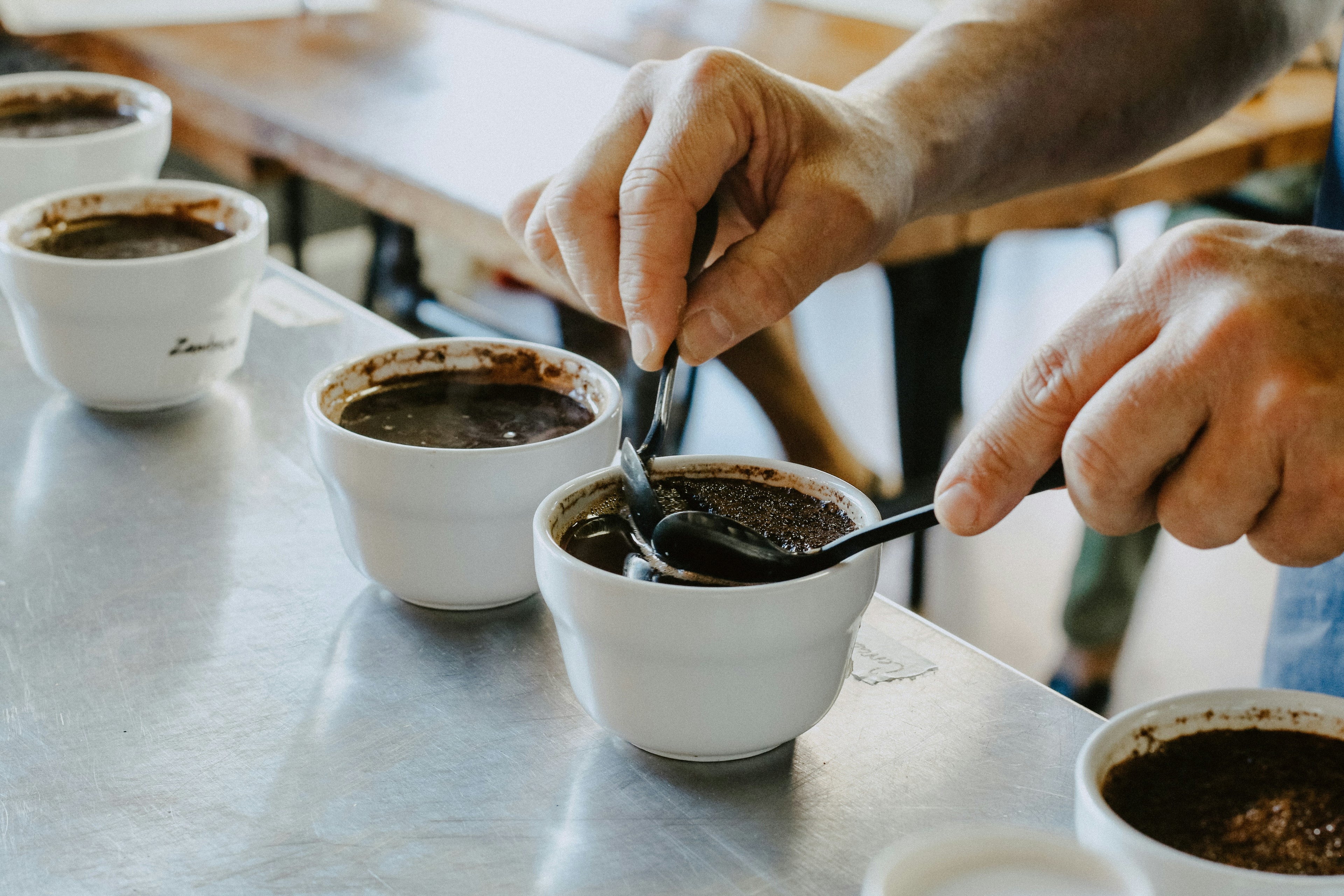
Cupping Process
Cupping Process
Cupping Process
Cupping Process
Cupping Process
Cupping Process
Cupping Process
Cupping Process
Cupping Process
Cupping Process
Cupping Process
Cupping Process
Cupping Process
Cupping Process
Cupping Process
Cupping Process
Cupping Process
Cupping Process
Cupping Process
Cupping Process
Prepping for Cupping: The Essentials
- Measure Your Cups: Place each cup on a scale, tare it, and fill it with water to determine its capacity. The standard ratio is about 9 grams of coffee per 150 ml of water.
- Prime Your Grinder: Run 2g of your first coffee through the grinder and discard it. This clears out any leftover grounds and ensures you’re tasting only the current coffee.
- Grind and Prep: Grind 2 x 9g batches of the coffee using a medium-coarse setting. Place each batch in separate cups, ensuring they’re labeled (even if discreetly for blind tasting).
Starting the Sensory Adventure
- Smell the Grounds: Take a moment to breathe in the dry grounds and note any aromas or feelings. Even if your first thought is simply “coffee,” write it down—there’s no wrong answer!
- Pour and Brew: Start a timer and add 150ml of hot water (around 94°C/201°F) to each cup. Ensure all cups are filled evenly.
- Heat Your Spoons: Fill a spare cup with hot water to keep your tasting spoons warm and clean.
The Tasting Moment
- 15-Minute Cool Down: Wait until exactly 15 minutes after pouring to start tasting. The coffee will have cooled enough for the flavors to shine.
- Taste and Slurp: Take a spoonful and slurp it—yes, make that noise! It helps aerate the coffee and spreads it across your palate for full flavor detection. Rinse your spoon between each cup.
- Spit Between Tastes: To avoid caffeine overload, spit each mouthful into a cup.
Heading
Description
Note-Taking and Observation
- Take Notes: Record your observations about flavours, comparing pairs if needed. Focus on one aspect at a time—acidity, sweetness, or fruitiness for example.
- Second Round: Taste each cup again to catch nuances you might have missed on the first pass.
Quick Tips for Cupping Like a Pro
- Use filtered water for consistent results.
- Let your taste buds relax—no need to rush perfection.
- Compare and chat with friends or colleagues; everyone detects different notes!
- Avoid talking about specific notes until everyone is done to keep your impressions unbiased.
What To Look For
- Fragrance vs. Aroma: Fragrance is the smell of dry grounds, while aroma is what you detect when hot water meets the coffee.
- Body: How heavy or light the coffee feels in your mouth.
- Aftertaste: The flavours left lingering after you swallow.
